 info@emergencydentalclinicchelsea.co.uk
 Mon - Sat : 9 am - 8 pm / Sun : 9 am - 4 pm
 078 8121 9291

TOOTHACHE CHELSEA
There are several reasons why people get toothaches. They can be classified as either temporary pain or chronic pain.
WHAT ARE THE CAUSES OF PERMANENT OR ACUTE TOOTHACHE?
When we talk about toothaches that go away quickly, we’re talking about discomfort or pain that lasts only a few seconds. They are transient, disappearing quickly, and lack tenacity and continuity. Here are some additional common examples of these types of pain:

- Sensitivity to touch or cold, as when brushing teeth. A sudden sharp pain that subsides as soon as the underlying cause is removed may be felt.
- Pain or sensitivity resulting from early tooth decay. Usually, hot or cold meals, beverages, and sweets can cause the feeling. Reversible pulpitis is another term for this condition. In these cases, a filling and decay removal are sufficient to treat the infection because it is still below the pulp, the tooth’s nerve house.
- A chipped tooth or pieces of teeth, a brief, sharp pain that disappears as soon as you stop biting and only gets worse when you chew.
WHAT ARE THE CAUSES OF RISKIER AND LONGER PERMANENT CHRONIC TOOTH PAINS?
The most common causes of chronic toothaches are listed below:
- A sharp, stabbing pain that varies in intensity and interferes with sleep can be caused by decay that has reached the pulp, the tooth’s nerve centre. This is because inflammation, which is brought on by infection, causes pulp swelling and excruciating pain. There are only two strategies to manage the pain
- Opening and removing the tooth is a step in the root canal therapy process known as a pulp extraction.
- A chronic infection that is giving you toothaches. After the acute pain phase, the tooth pulp may eventually lose its vitality and turn necrotic if treatment is not received. The infection may then descend and spread to the jawbone around the tooth’s root, where it may cause an abscess or cyst. The treatments for this type of infection are extraction or root canal therapy if that is feasible.
- To get rid of the tooth, consider extracting it. Save a tooth whenever possible if it can be restored. Extraction is the best option when predictable dental repair is not achievable.
- Pain resulting from partially erupted or impacted wisdom teeth. The space required by the wisdom teeth in the jawbone is frequently insufficient. They might only be partially through the gum line, or they might be impacted against another tooth. Under the gum line, food particles and bacteria can accumulate and cause pericoronitis, an infection and inflammation around the tooth. Wisdom tooth extraction might be suggested if this keeps happening.
- Moreover, by urging the teeth in front forward, the impacted wisdom teeth can damage the teeth next to them or cause crowding. It is advised that these teeth be extracted while a specialist conducts a clinical assessment.
- Excruciating pain, frequently referred to as “dry socket,” which usually starts a few days after tooth extraction. This is the stage after tooth extraction when an infection begins to grow in the tooth socket. Antibiotics have no effect on this type of pain; the only treatment for it is the local use of strong antiseptics. It occurs more frequently in difficult extraction cases, especially when surgery is necessary.
- Since smoking plays a significant role in the development of dry sockets, it is advisable to refrain from smoking for a few days after extraction. Healing takes time.

RELIEF FROM PAIN
Upon your arrival at Emergency Dentist Chelsea, we can identify the source of your toothache and initiate appropriate treatment. We advise addressing the root cause of the toothache because:
- Most painkillers are only marginally effective in controlling pain in the great majority of cases, particularly when dealing with severe pain.
- Painkillers usually have minimal effect when there is a pus formation due to an infection or inflammation (swelling) in the tissue. It takes active therapy to drain the tooth. This covers the removal of the pulp, root canal treatment, and any pus accumulation from the tissues associated with the tooth.
- Painkillers usually work best when pain is mild and in its early stages. This acts as a signal to seek assistance as soon as possible in order to stop the pain from getting worse.
PAIN KILLERS
The most popular over-the-counter pain relievers in the UK are as follows:
- Anti-inflammatory medications, like Ibuprofen. 400 mg every eight hours is the maximum daily dosage. They work well against inflammation-related pain, such as pulpitis.
- Another commonly available medication that works well for treating mild to moderate pain until you can see a dentist is paracetamol. Even though ibuprofen and paracetamol have distinct modes of action, they can be taken together.
- Substances that contain codeine, like co-codamol, a combination of paracetamol and codeine. Typically, the dosage is between 8 and 500 mg, or 500 mg of paracetamol and 8 mg of codeine.
Please be aware that there is a risk of overdosing if you combine it with paracetamol.
SENSITIVE TEETH
If you’re not consuming any hot or cold liquids or food, it might be time to address the underlying reasons behind your teeth’s sensitivity!
Teeth sensitivity could result from the following factors:
- Old, leaky fillings and tooth decay that has cracked teeth to reveal the dentin of the tooth.
- Damage to tooth enamel from using a hard toothbrush and a firm grip when brushing too firmly.
- Extremely acidic foods and beverages can erode teeth.
- Gritting your teeth when the day is over.
- Sensitivity after dental work is normal, but it usually subsides quickly, especially after crowns, fillings, and teeth whitening.
- The gums receding to reveal the root surface.
SYMPTOMS FOR SENSITIVE TEETH
When particular conditions occur, sensitive teeth may become painful or uncomfortable. You may feel this pain at the roots of the affected tooth. Some of the most common triggers are:
- warm food and beverages
- cold food and beverages
- chilly temps, beverages, and confections
- acidic meals and beverages
- cold water, especially during routine dental cleanings
- brushing your teeth or using mouthwash that contains alcohol
Symptoms may come and return during a period of time with no apparent reason. They might be extremely powerful or light.
RELIEF FOR SENSITIVE TEETH PAIN
If you have moderate tooth sensitivity, you can experiment with over-the-counter dental treatments.
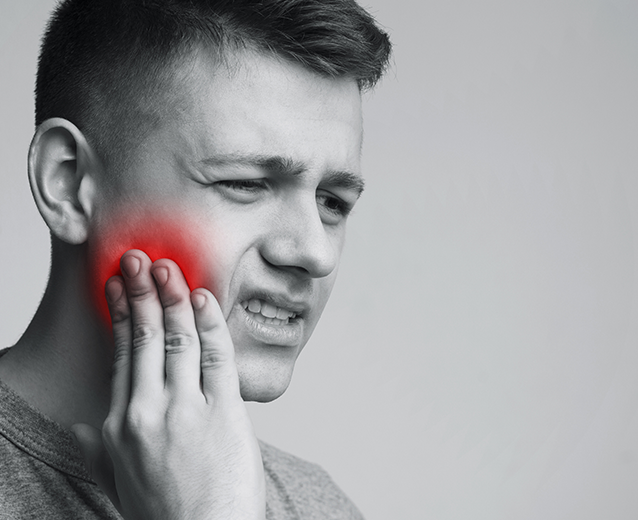
- Use a mouthwash without alcohol to prevent further sensitivity to already sensitive teeth.
- Using softer toothbrushes and brushing more gently can both be advantageous. There will be proper labelling on soft toothbrushes.
- Usually, these treatments need to be applied several times to work. You should see a difference in about a week.
If using at-home remedies doesn’t work, you can talk to your dentist about prescription toothpaste and mouthwash. They may also use fluoride gel in the office or prescription-grade desensitising agents. These could help to fortify and preserve tooth enamel.
To stop your teeth from becoming sensitive again, you should take care of any underlying issues that are causing it.
RESIN BONDING
Dental bonding allows you to create a natural-looking barrier over your teeth’s roots. The process of this treatment entails applying tooth-coloured resin to your exposed tooth roots. The finished appearance is immaculate and enhances your smile for a period of five to ten years.
TOOTHPASTE
Select toothpaste that has been specially designed to accommodate teeth that are sensitive! These toothpaste may also include non-irritating ingredients along with desensitising ones to help keep pain from going all the way to the tooth’s nerve.
Before taking any medication, make sure you are not allergic to any of its ingredients. Ensure that you carefully follow the directions to avoid overdosing or other potential issues. Consult your dentist or doctor before beginning any new medication.


